Ask around San Diego and you will hear the same assumption about down payment help. It's for low-income buyers. Think that through. At our prices, how does a low-income household carry a San Diego mortgage, assistance or not? The premise falls apart.
Meanwhile a program sits in plain sight that almost nobody mentions. It pays your down payment, sets no income ceiling, welcomes repeat buyers, and after three years it writes the debt off entirely.
The name is the Chenoa Fund. Below is the mechanism, plus the two conditions worth knowing before you sign anything.
How the Money Works
CBC Mortgage Agency runs it. The fund rides alongside an FHA loan, the government-backed mortgage aimed at buyers who haven't banked a large reserve, and it supplies your down payment up to 3.5% of what you pay for the home.
The money shows up as a forgivable loan. It is a second mortgage, not an upfront grant. The 3.5% forgivable option can be forgiven after thirty-six consecutive on-time first-mortgage payments, provided the loan’s other conditions are met.
The payments must be consecutive. A late payment restarts the forgiveness period. Borrower approval, occupancy and the other terms of the signed loan documents still apply.
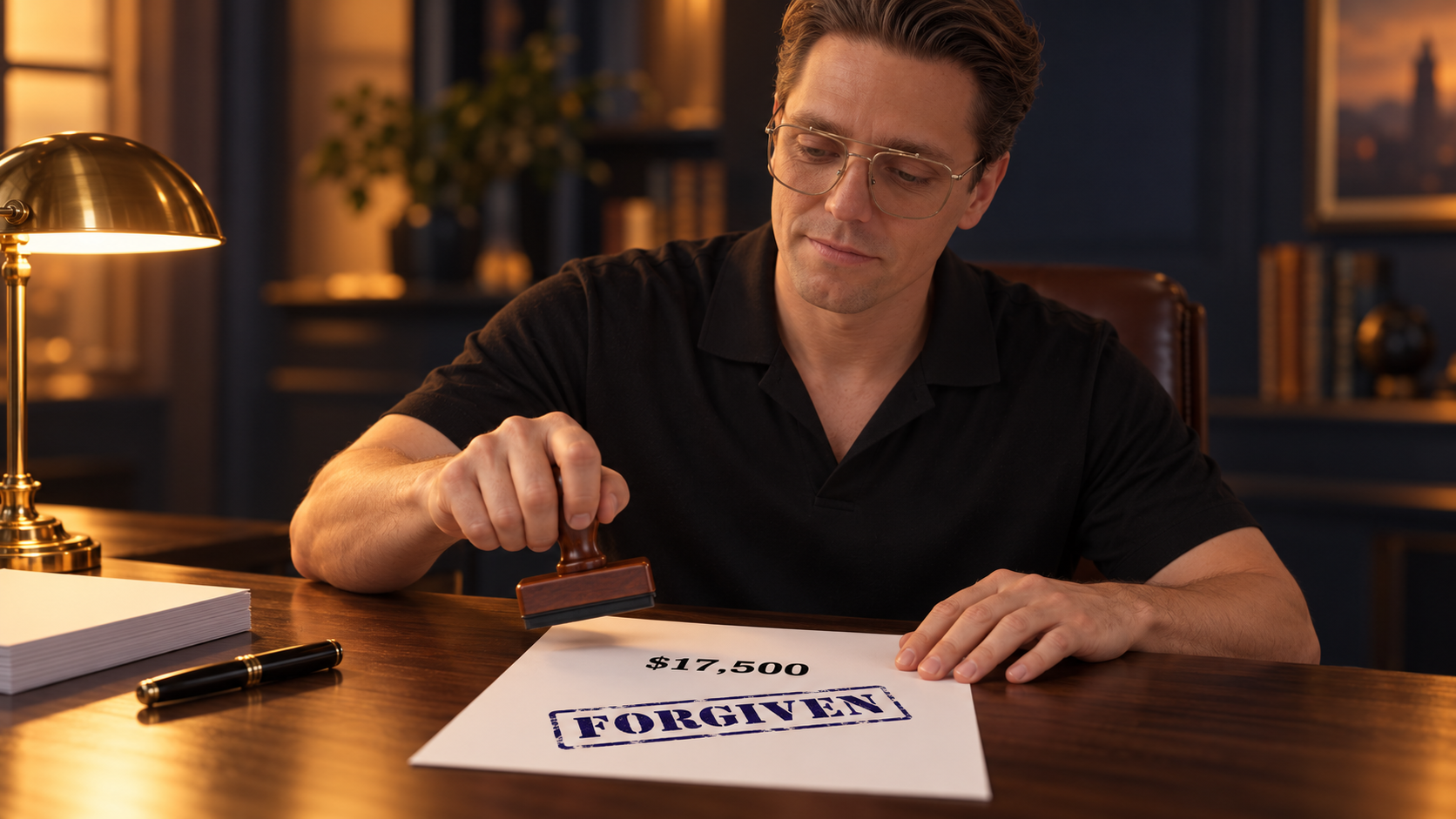
On a $500,000 San Diego condo, 3.5% comes to $17,500 you never carry to the closing table. The amount varies with the eligible purchase price or appraised value and the applicable loan limits. Closing costs and other cash requirements may still remain.
Who Qualifies
Owned a home before? Fine. Earn a solid living? Also fine, because no income ceiling applies here. Published program information lists a minimum credit score of 600; lender requirements may be stricter. Ask the approved lender which education and counseling requirements apply to your score and loan.
The real gatekeeper is distribution. A short list of approved California lenders handles this product, which explains the silence around it. Your neighborhood bank branch will not have it on the shelf.
Why It Beats the Other Programs
Dream For All leads with a bigger number, up to 20% down, and that number does the program a favor it hasn't earned. Selection uses a randomized process when applications are open, and funding is limited. Check eligibility and the application window, but do not build a purchase plan around receiving a voucher.
CalHFA also attaches assistance to an FHA loan. MyHome parks behind your first mortgage as a deferred-payment junior loan. No monthly payment does not mean no interest or no repayment obligation. It generally comes due when you sell, transfer, pay off or refinance the first mortgage, subject to any approved resubordination. Review the note for interest and repayment terms; MyHome is not a forgivable grant.
Chenoa breaks that pattern. For the 3.5% forgivable option, thirty-six consecutive on-time first-mortgage payments can lead to forgiveness once all conditions are satisfied.
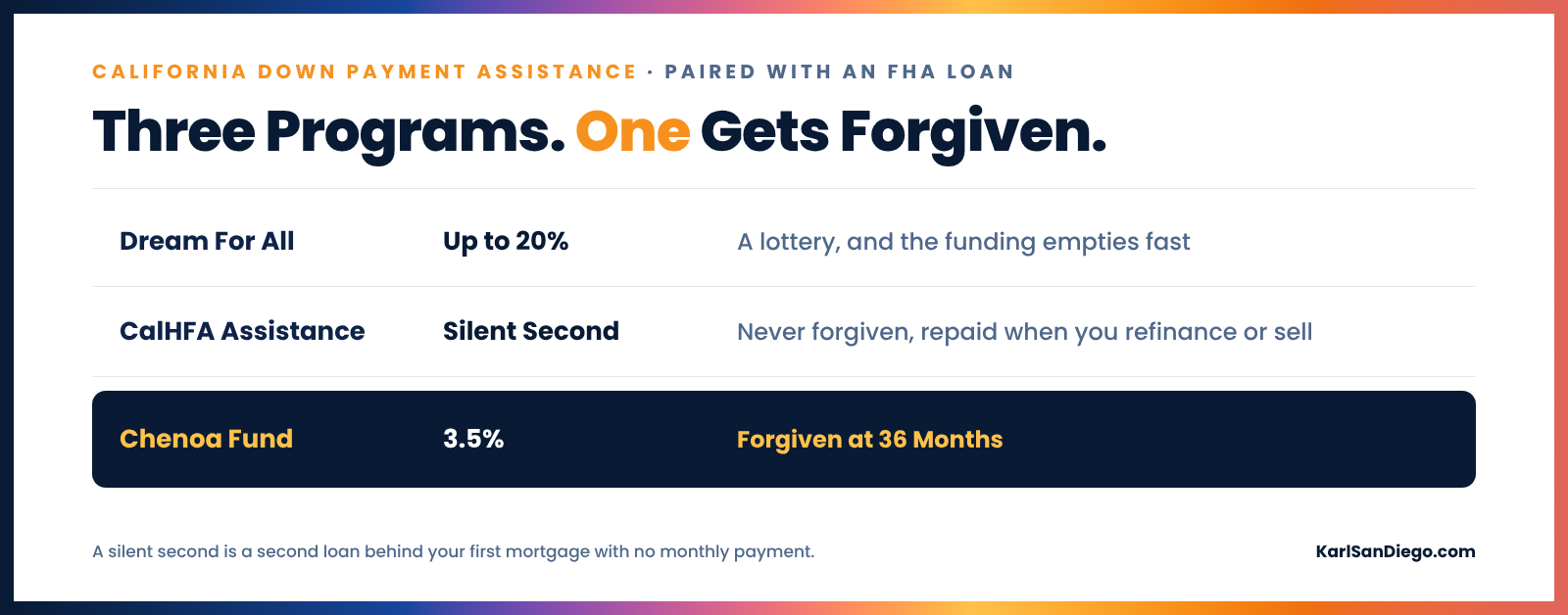
Forgiven, against carried until you sell. That single difference is why the program earns a look.
The Two Catches
Catch one lives in the refinance. Every FHA loan charges mortgage insurance, a monthly add-on that covers the lender if you stop paying. Put down as little as this program allows and the charge never expires on its own. With this small down payment, annual FHA mortgage insurance generally lasts for the mortgage term. Refinancing into an eligible non-FHA loan or paying off the FHA loan ends that FHA coverage; a refinance is not guaranteed.
Now watch the collision. Forgiveness requires thirty-six consecutive on-time payments and satisfaction of the loan terms. Refinance at month thirty, before forgiveness, and the outstanding assistance becomes due. Sequence matters more than speed here. Confirm forgiveness in writing before planning a refinance. Compare the new rate, fees and mortgage-insurance terms with your lender.
Catch two is occupancy. The loan requires you to live in the house as your primary residence. It is not an investor-property program. Confirm the occupancy requirements in the signed documents. Selling, transferring title, refinancing or defaulting before forgiveness can trigger repayment.
Most buyers clear that one without thinking. The risk hides elsewhere. Free money has a way of talking people into houses and neighborhoods they would otherwise pass on, and this one locks you in place for three years. A home you settled for gets old fast.
My Take
Read the fine print on most assistance programs and the shine comes off. Dream For All still looks best on paper, so file for it while it's open, with the understanding that a lottery is a lottery.
After that, Chenoa stands alone, and the gap isn't narrow. One word explains it. Forgivable. A CalHFA silent second trails you to a closing table years from now. This option can be forgiven once the borrower satisfies its conditions.
If a down payment is the single thing keeping you in a rental, the program is worth a serious conversation. Reach out and I'll connect you with a certified lender who carries it.
Watch the Full Video
This post covers how the Chenoa Fund works and the two conditions attached to it. The full video goes further. I walk through the 2026 San Diego County FHA loan limits, the duplex move that raises your limit and puts rental income from the second unit toward your mortgage, how lenders count that projected rent to qualify you for more, and which program I tell buyers to apply for first.
Watch the full video on YouTube
If you have any questions or concerns, don't hesitate to reach out.
As always, I'm Karl Kyler, your San Diego Realtor.
Karl Kyler · Karl San Diego
eXp Realty of Southern California, Inc.
KarlSanDiego.com · 619-829-2908
DRE #01439839