
An ADU, or accessory dwelling unit, is the granny flat, casita or converted garage behind a house. For decades it came with the property. You rented it out or moved family in. You never sold it on its own.
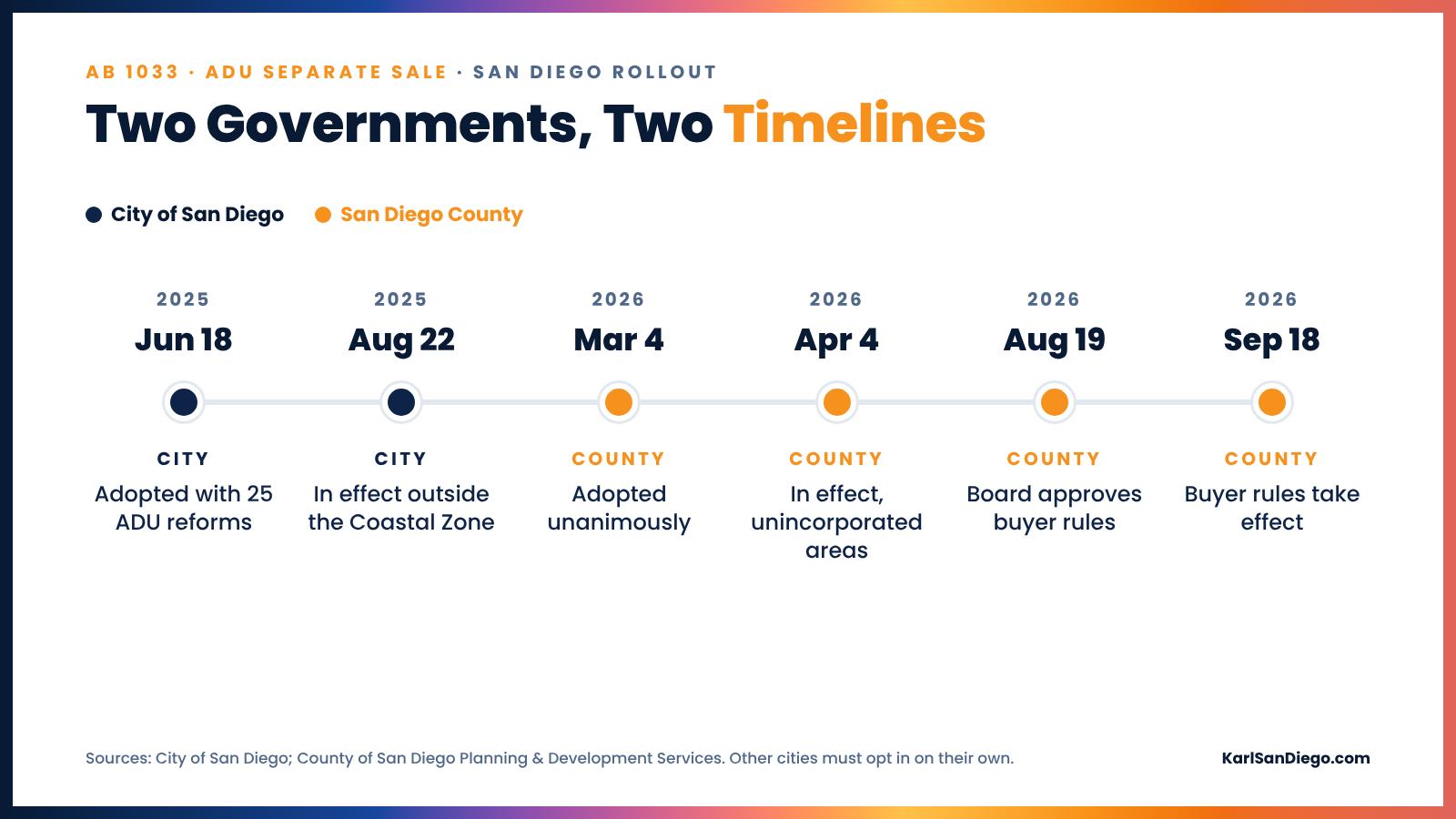
A state law called AB 1033 changed that. In effect since 2024, it gives each city and county the option to let an ADU sell apart from the front house. The City of San Diego and San Diego County both opted in. As of September 18, the County also sets rules on who gets to buy.
Here's how it works, and the one detail every buyer needs to understand first.
A Condo, Not a Lot Split
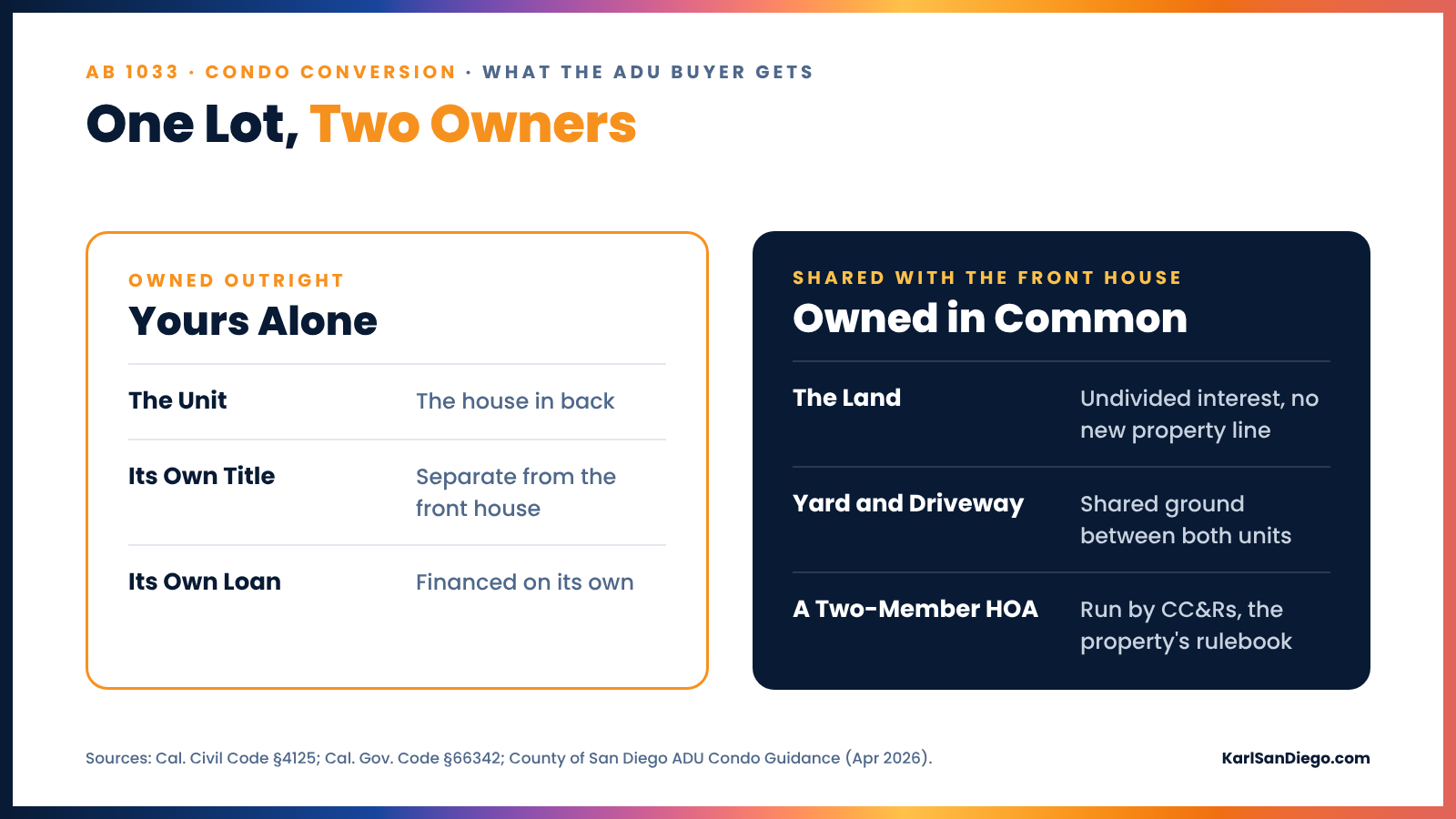
The tool here is a condominium conversion. In the two-home example here, the property becomes a two-unit condominium project. The front house is one unit, the ADU is the other, and each can have separate title and financing, subject to lender approval.
What doesn't happen matters more. The lot never gets split. A lot split falls under a different state law, SB 9, which draws a new property line and creates two parcels. AB 1033 draws no line at all.
California law defines a condominium as two pieces. You own your unit outright, and you hold an undivided interest in the land alongside the other owner. In plain English, the ADU buyer owns the house in back. The recorded condominium plan, deed and CC&Rs define the common areas, access rights and any exclusive-use areas. Shared ownership does not automatically mean both owners can use every part of the yard.
Where It Applies in San Diego
Your address decides whether this option exists for you.
The City of San Diego adopted it on June 18, 2025, as part of a package of 25 ADU reforms. It took effect August 22, 2025, outside the Coastal Zone. Own a home near the coast inside city limits? Check with the City first, because Coastal Zone parcels follow a separate track.
The County adopted its version unanimously on March 4, 2026, for the unincorporated areas. It took effect April 4, 2026.
Chula Vista, Oceanside, Escondido and every other city in the county each make their own call. The City and County decisions don't reach them.
The New Rules on Who Buys
In the unincorporated county, the Board of Supervisors went a step further. On August 19 it unanimously approved three rules, and they took effect September 18.
- Right of first refusal. Each unit owner must establish a right-of-first-refusal contract with an eligible existing tenant or another condominium owner on the lot. The contract holder can purchase by matching a future offer.
- Owner-occupancy affidavit. The buyer states that they or a family member plan to live there as a primary home.
- Public posting period. Each time the unit is listed, the owner must publish it for the required period and disclose that it is offered to buyers intending to use it as a primary residence for themselves or a family member.
The aim is to keep these units with people who live in them, not with investors building a rental portfolio. County staff will report back within 180 days on enforcement, deed restrictions and larger ADU sizes, so expect the rules to keep moving.
What a Buyer Takes On
Shared land needs rules. That's why the state puts these condos under the Davis-Stirling Act, California's rulebook for every condo association. It's also why the County requires an HOA with CC&Rs before it approves the map.
CC&Rs stands for covenants, conditions and restrictions. Think of it as the rulebook for the property. Per the County's guidance, it covers upkeep of the shared areas, HOA dues, insurance, utilities, access easements and rental limits.
My concern is the size of that HOA. Most associations spread decisions across dozens or hundreds of owners. Here there are two. If you and your neighbor up front see a cracked driveway or a leaking sewer line differently, no third vote settles it. Read the CC&Rs closely during escrow, and ask for them before you write an offer whenever possible.
Financing is the other piece. Each lender with a loan on the original property must sign off in writing before the County records the condo plan. State law spells out that a lender has the right to say no. Lenders also have little history with two-unit backyard condos, so raise it with your lender early.
The Bottom Line
AB 1033 opened a door that didn't exist in San Diego before. An eligible backyard ADU can be sold as a condominium after the required approvals, with separate title and financing subject to lender approval. Go in knowing you're buying a house on a shared lot, with a two-person HOA and common ownership and use rights defined by the recorded documents.
Watch the Full Video
This post covers how San Diego's ADU condo law works and what a buyer takes on. The full video goes further. I walk through the debate between Supervisors Jim Desmond and Monica Montgomery Steppe over who should be allowed to buy, the County's checklist for owners before they sell, my take on cashing out the back unit versus what it does to the value and taxes of the house you keep, and why this matters for first-time buyers when the median condo or townhome in San Diego County sold for $670,000 in August.
Watch the full video on YouTube
If you have any questions or concerns, don't hesitate to reach out.
As always, I'm Karl Kyler, your San Diego Realtor.
Karl Kyler · Karl San Diego
eXp Realty of Southern California, Inc.
KarlSanDiego.com · 619-829-2908
DRE #01439839